IoT and connected product development have become a specialism for us at Bulb over the last decade or so. Our expertise in digital interface design and technology development combined with our love of working collaboratively with a range of partners has produced some of the studio’s most enjoyable and rewarding projects and has resulted in some remarkable technology.
IoT and Connected Product Development Highlights
After years of managing connected projects, we’ve learned that keeping the people, timelines and decisions moving together is the key to a successful project.
Connected vehicles.
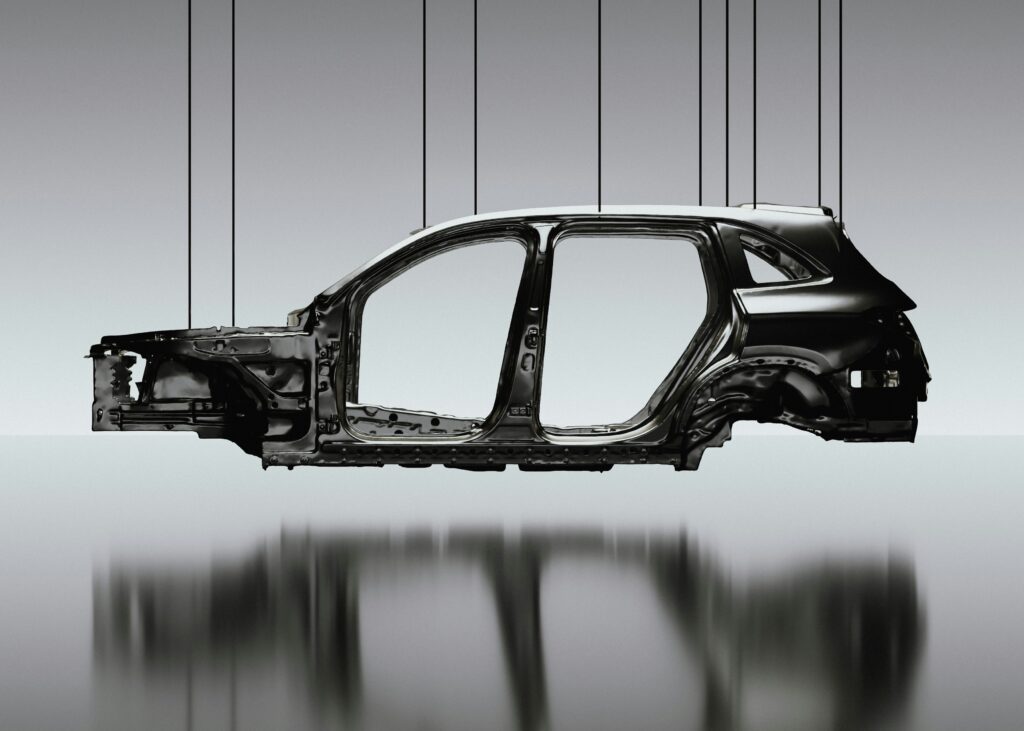
For Jaguar Land Rover, we worked with their Electrical Engineering R&D team to develop proof-of-concept prototypes, tech demonstrators and UI concepts covering everything from the self-learning car to HMI development for autonomous vehicles and driver convenience projects like automatic on-approach door-opening systems.
We also took the Jaguar Go I-PACE app from lo-fi prototype – a phone, a GPS tracker and a laptop – to a customer-facing app which tracked drivers’ journeys to simulate life with an electric car
A smart cricket ball.
For The Batting Labs, we got our hands dirty testing telemetry data from a sensor embedded inside a cricket ball. Months of prototyping, testing, interpreting and visualising data with the hardware designers at De Montfort University resulted in a product that measures individual bowler deliveries, coaching the bowler on their next delivery – and catching the eye of the ECB in the process.
Domestic thermal testing.
Working with our friends, the industrial designers at Hodges & Drake Design, we are working on the digital product that accompanies and controls a suite of connected products which perform overnight testing of thermal insulation for the construction industry – even when there’s no mobile signal on new-build developments.
Exhibition games.
With our long-time collaborators at Nimlok, we have delivered a live, gamified experience. Visitors use their own phones as controllers for engaging games on exhibition screens and controlling real-world physical objects via Bluetooth and Wi-Fi. Multiple device-types, hundreds of users and limited Wi-Fi all combined to bring further challenges which, through close collaboration, we overcame to produce a robust and flexible system.
The hardware, the users and the settings were different every time but we learned lessons that apply across the board.
The product is the entire system
On the cricket ball, the ball, the chip inside it, the Bluetooth link and the app all had to behave as one product. For the thermal testing system, the hardware sits in a building, a technician is in the field and the data sits in the cloud.
In both cases, varied skillsets from multiple businesses and institutions combined to become one. All of the pieces depend on each other, if any one slipped the others were affected. Good IoT and connected product development starts by drawing the whole system on one page, agreeing who owns each part and where the close collaboration needs to happen.
Often, having effective team management in place is the most important factor to encourage teamwork and avoid siloed team.
Design for real conditions
The points of failure are always in the gaps that weren’t designed-out. A flat battery, a dropped connection or a slow first-time setup.
Go I-PACE had to produce rich journey data with no user input and minimal battery drain on the phone. The thermal testing brief called for working offline, on a local network and through the cloud, because technicians don’t always have signal.
On the cricket ball, pairing was a manual step the first time and automatic after that. A calibration delivery taught the system what counted as a delivery for each player. Informing the user, streamlining the process and making the entire system intuitive was key. The first few minutes of use often decide whether the product can be trusted and relied upon, so they deserve the most design attention.
Consistent experience across multiple devices
In IoT product development, software rarely lives on one screen. Go I-PACE ran on iOS and Android phones. The thermal testing product brief asked for a responsive design across mobile, tablet and desktop. Nimlok’s connected product is required to work on the device of every player and every player brings a different device.
The capabilities of web technologies help with UI scalability and responsiveness but ultimately a rock-solid, intelligently-built design system underpins every good IoT product development project.
Hardware and software development scheduling
Hardware dates are often fixed. Software dates can usually bend.
On the cricket ball, the prototype and manufacturing milestones were fixed, so the app had to be testable well before the final ball existed.
Early in my career, leading a design team on a PlayStation®3 launch title, the hardware date could not move but for the first time, post-launch updates were possible (as most users found out when inserting the game disc on day one of launch). This is now the norm and means managing multiple critical workstreams is key to timely delivery.
IoT and connected product development needs a team
The hardest integration in IoT product development is rarely technical. On a connected project the Project Manager usually works with UX and UI designers, software and web developers, industrial and product designers, electronics and firmware engineers and senior stakeholders. They don’t share a common vocabulary, so a good understanding of each discipline and the ability to translate between them is a key digital product leader skill.
On Go I-PACE, that meant working with Jaguar Land Rover’s engineering and research teams, its digital innovation team, its agency Spark44, senior management stakeholders, a product sponsor (global head of digital strategy and innovation) and most crucially, Jo, the Digital Innovations Co-ordinator who was the person who was able to co-ordinate and bring everyone together. Organisations of the scale of JLR are quietly run by people like Jo and they make these projects happen.
Data, AI and the future of IoT
Connected products generate data and accurate interpretation of data can change decisions. On the cricket ball, we shaped the data views around what players wanted to see first, interpreting complex data to help bowlers to understand and improve their deliveries. On Go I-PACE, the app took raw movement data and interpreted where journeys were happening without user input, converting that into range and cost estimates people could understand.
AI now makes IoT product development easier. It can summarise device data in plain language and help us prototype companion apps in days rather than months. There is still an AI governance gap when it comes to releasing new products and I’ve written about the balance in AI and human creativity in digital product design. So whilst AI doesn’t replace testing on real devices or experienced human judgement it has supercharged IoT and connected product design and development.
Working with us on IoT and connected product development
If you’re planning an IoT product development, I’d be glad to talk it through without obligation. We’re comfortable in the room with senior stakeholders, hardware, firmware and product design teams as well as designers and developers. We’ll help you map the whole system, prove the risky parts early and keep every team moving together. When the prototype works, we can also help you take it from proof of concept to market-ready product.
Photo by Louis Reed on Unsplash
Frequently asked questions
IoT product development is the process of designing and building connected products where hardware, software and data work together. It covers the physical device, its firmware, companion apps, cloud services and the user experience that links them.
A connected product depends on hardware that behaves differently from one device to the next. Teams must plan for pairing, battery life, poor connectivity, firmware updates and fixed hardware timelines that ordinary apps rarely face.
List every device and screen the product must support. Choose technology that works across them, such as responsive web apps. Test performance on real devices early. Keep the core experience consistent and adapt the details to each screen.
They need one shared plan. Agree who owns each part of the system, fix the hardware milestones first and plan software releases around them. Regular joint catch-ups and a clear record of decisions keep every team aligned.
Design for it from the start. The app should work offline, on a local network and through the cloud, store data safely on the device and sync when a connection returns. QUB's brief for technicians working on site called for exactly this.
Test first-time setup, pairing and the first successful use of the device. These moments decide whether people trust the product. Then test battery use, lost connections and updates.
A connected product team needs product, UX, UI design, mobile and web development, firmware and electronic engineers, data and cloud skills and project management that coordinates all of them. The coordination skill is often the one that is missing.
Yes. We've worked on connected vehicle apps for Jaguar Land Rover, a smart cricket ball, a home thermal testing system and an exhibition gaming platform for Nimlok. We design, build and manage these projects alongside hardware and product design partners.